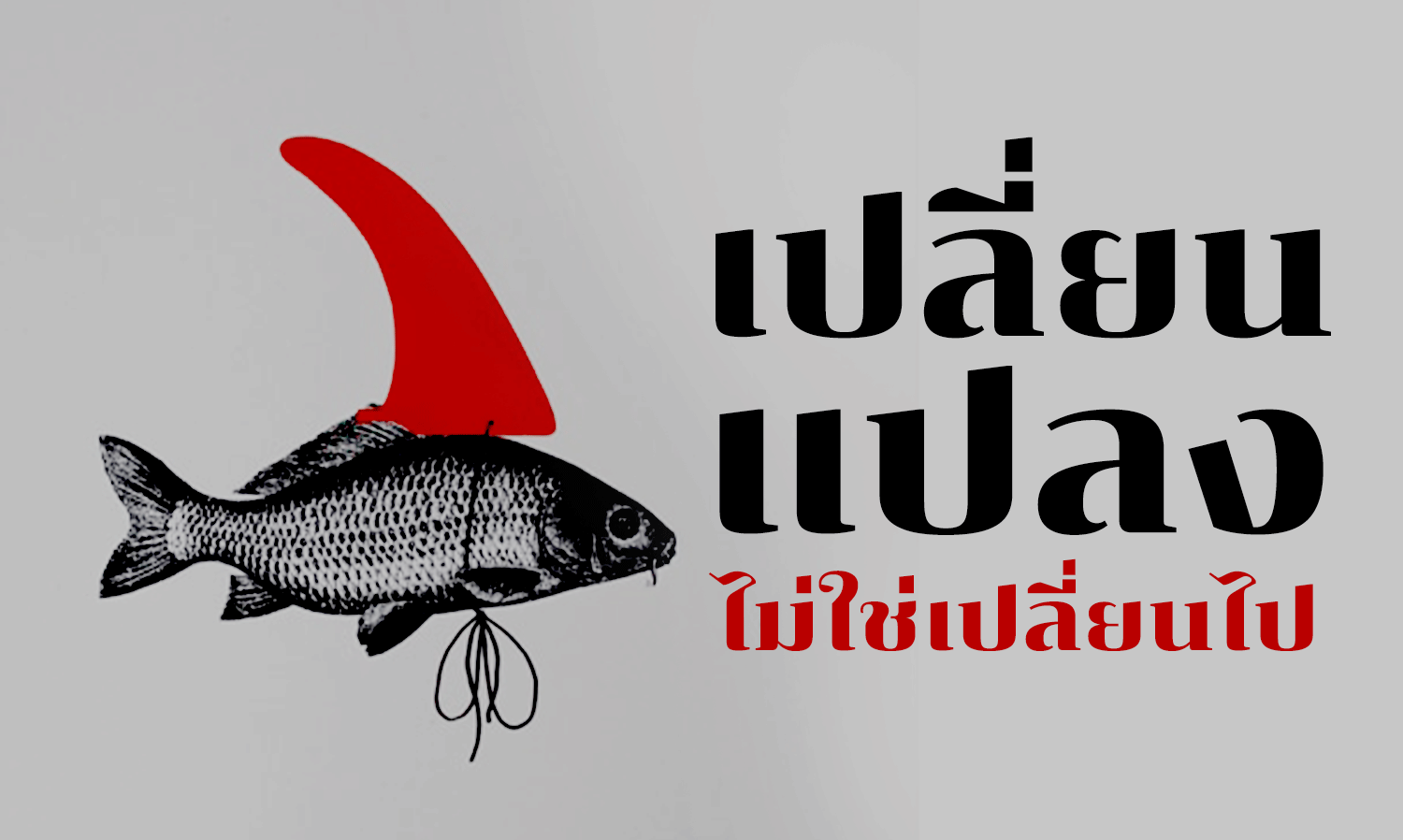
Change, Not Just Change
I have always been a person with high self-confidence. Since I started to think and read, I felt like I was becoming an adult right after I got my ID card at the age of 15 (back then). During my high school years, I had friends my age, but I often engaged with older peers (who were more experienced).
Having friends who were older contributed to my broader understanding (from a child's perspective). Coupled with the fact that when I expressed my thoughts, older friends accepted them, I mistakenly believed I was knowledgeable and skilled. This, along with other factors I have mentioned in previous articles, led me to become someone who has high confidence in my own thoughts. You could even say I was stubborn.
Stubbornness is a tricky term; sometimes it can be seen as good, and other times not so much. What I want to convey is that I am someone who cannot easily be changed, as I hold firmly to my own beliefs. Any change in my life comes solely from my own thoughts and beliefs.
This unwillingness to “change” easily has caused my life to feel somewhat stagnant, even though everyone says I have knowledge and abilities. It feels as if my skills are useless; I think I am capable but cannot apply it. This could be described as not truly skilled..
Being steadfast and determined in something is generally a good trait and a quality that leads to success. If you are indecisive and keep changing, it will be difficult and slow to reach your dreams and goals. Because whenever a person “changes”, it means they are heading down a different path. If someone “changes” frequently, it can lead to confusion about where their life is headed.
“If I can’t change myself, I’ll just change instead.”
In my life, I have often resisted “changing” anything. One day, when I felt my life was going nowhere or that I couldn’t move forward, I chose to “change” instead. Many people are like me, but we think that our “changing” is actually “changing” ourselves. In this context, it is not the same at all. The difference is..
- Changing = same goal, same path
- Changing = new goal, new path
This is one interpretation that might help clarify things, and it’s not wrong. However, if we look deeper, this issue often seems contradictory. In that state, we might say we have changed and tried many things, but it’s not as simple as just changing. Sometimes it is correct, but often it is not.. For example..
When we “change” from someone, it means we are now interested in someone else or have stopped caring about that person. We might say we tried to adjust and change, but it didn’t improve. Ultimately, it’s because they couldn’t change that we lost interest, patience, or whatever it may be..
Let’s reflect a bit more on the perspective of someone who “changes”. It doesn’t mean you haven’t changed, but in reality, you want to change them too. And that is the main reason for your change. Even if you have changed or adjusted yourself in the way you claim, the one who leaves is often because they are dissatisfied that the other person hasn’t changed as they wished. In truth, the other person also wants you to change something as well. However, they will argue that they can’t tolerate it anymore. In summary, those who change don’t necessarily change themselves; they actually want the other party to change to meet their desires. This applies to habits, actions, and even appearances. When one day they become dissatisfied, their standards rise (who can change their appearance?), but it reflects an inner truth that is not expressed.
If we genuinely accept this, it’s clear that if you have ever been the one to change, you know deep down what the other person wants you to change. But you don’t do it; you choose to make them change first as a condition because you have “changed”. If you haven’t truly changed, you would likely be ready to “change” further, even if you have already changed before. This explains why most of us truly change ourselves when we start a new relationship.
In reality, it might be hard to compare in terms of relationships. Not changing at all might not be considered stability, as in terms of habits and living together, there must be some change or what we call adjusting to each other, so that no one changes. However, the mindset of who “must change first” often leads to the end of a relationship and necessitates a change. This is a situation involving two people, but it is not different from other issues that occur within ourselves.
As I mentioned at the beginning, there was a time when my own thoughts were very dominant. At that time, if any event occurred that had an impact, I would not accept it, thinking it was not true in my mind. In the realm of human thought, there is always another voice or person to counter and find reasons for that issue.
If stubbornness, or what most call pride, wins, we will conclude that “we don’t need to change anything” and will let the environment change instead..
This mindset, if stubbornness, or what most call pride, wins, we will conclude that “we don’t need to change anything” and will let the environment change instead.. Many times, this is impossible. As mentioned, when the final outcome emerges, we will blame the environment, factors, and luck for not being favorable. We might feel we cannot stay on this path; we are not suitable, we have no luck, we lack opportunities, and various excuses lead us to choose to change in another direction.
For example, everyone wants to be rich because it is an important factor. But when working and not earning much, unable to save, we adjust our mindset to something else, like being content with what we have. There’s nothing wrong with that, and we blame the environment in other ways, such as having no luck, not being born with capital, or not being born smart. We close off our opportunities to be wealthy because we stop striving and stop looking for ways. Clearly, we don’t change anything in our actions because we have already changed our mindset..
On the goals or paths we desire, they are not much different from others, such as wanting a house, a car, a lot of money, a complete family, and happiness. But when we think about reaching those points, we know how to achieve them. However, it cannot be the same as everyone else, meaning that people have different backgrounds and ways of living. It wouldn’t be wrong to say they have different starting points.
In this context of different foundational factors, it is not actually a determining factor for whether something is possible or not. However, we often use these things to make us change, thinking we can’t do it because our foundations are different. Yet another person might say they did the same as us and didn’t see results. Well, the foundations are different.
Both sides are contradictory; we must try to change methods, change environments, and even change habits. Ultimately, many people succeed in ways we aspire to, even with foundational factors that are not much different from ours or even worse. This is something we know well and have seen. Those people just don’t stop and remain focused on their goals. No matter whose life is successful, they have gone through tough times; they just remain the same.. not changing.
Nevertheless, whether to change or to change, if you read this and start to feel confused, I would like to summarize: If you have any goals or objectives, don’t deny the need for change. If you see that it’s not working, accept that the methods, processes, or ways you have been using haven’t been effective. Your beliefs and identity may not be suitable. Be brave enough to open up, experiment, develop, and be cautious not to deceive yourself into thinking you have changed..
It’s not that life cannot “change”. Goals and satisfactions of any kind, we certainly have the right to choose. However, most of the time, it’s not like that; we change into things we deeply still want. Life thus loops back in terms of not improving with any changes because if we continue to change based on the same goals until we find a good and correct path, it will be understood that this change itself prevents us from having to change.
This revised article was first published on Facebook Sirichaiwatt on 11/6/2019.
SOURCE: www.sirichaiwatt.com